AI for Electrical Takeoff: Lights, Outlets, Detectors & Cable Tray

Why Estimators Use AI Assistance
Save precious time
Reduce hours spent searching through drawings and schedules so you can concentrate on pricing and strategy.
Keep numbers traceable
Draft outputs point back to the source documents, making reviews and clarifications easier with your team and clients.
Stay flexible
Addenda and changes happen. It’s simpler to update and re-issue a takeoff when the groundwork is already prepared for you.
Upload PDFs and run a simple prompt. A draft electrical takeoff is prepared and you are notified when processing is completed.
How It Works
- Upload your PDFs — Add electrical plan drawings, single-line/riser diagrams, and any equipment schedules you want considered.
- Write your prompt — Tell Civils.ai what you need (for example: “Count lighting fixtures, receptacles and fire alarm devices by room; measure cable tray lengths by width and level.”).
- Click “Run” — The platform begins preparing a draft takeoff based on your uploaded drawings and schedules.
- QA review & adjust — Your QA team reviews the draft, fixes any issues, and confirms assumptions before release.
- Share with confidence — Release the reviewed drawing set and quantities to your stakeholders with clear references back to the source PDFs.
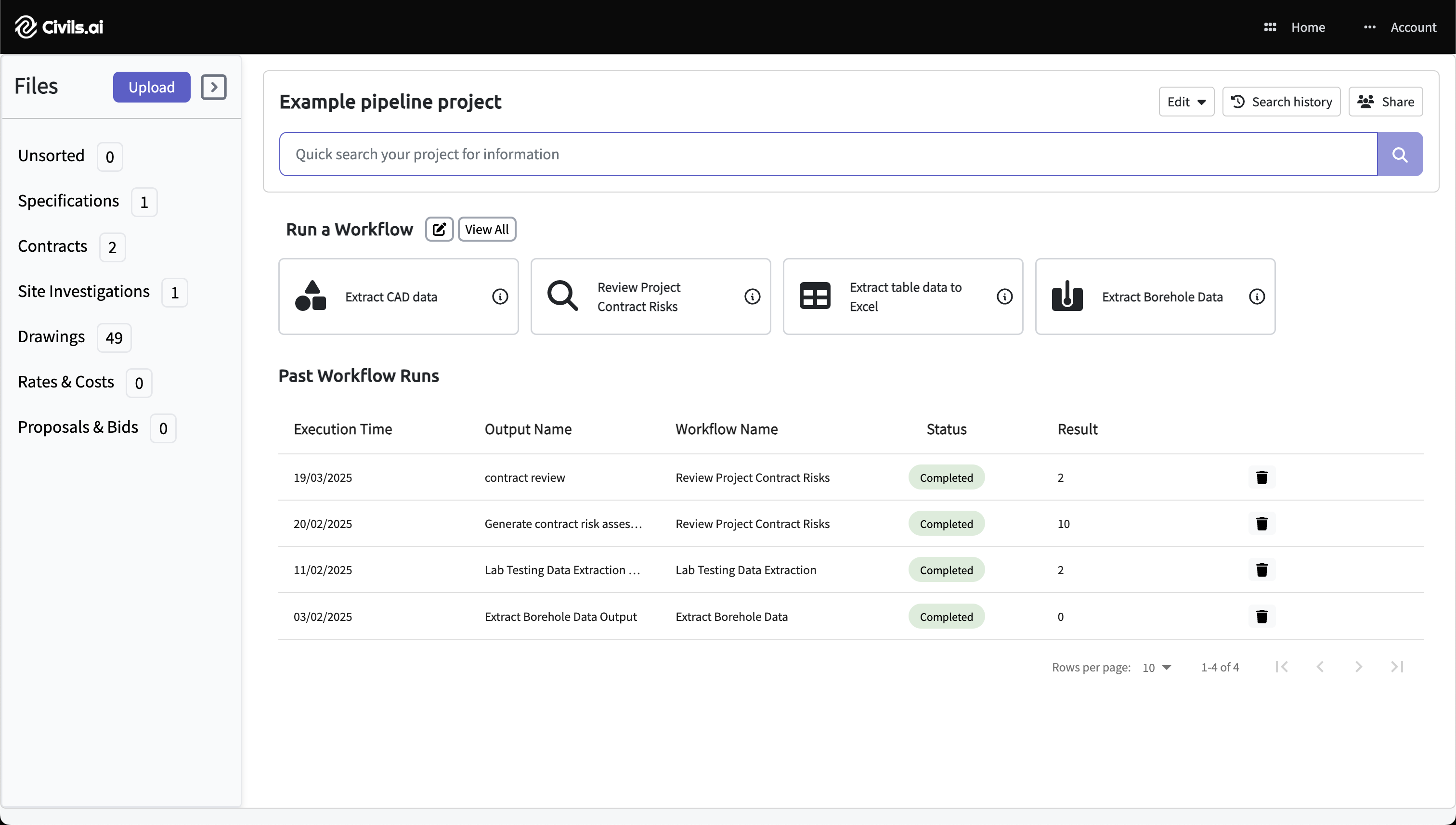
Upload PDFs
Drag & drop your drawings or documents and select Extract CAD data. Works with scanned, historic and multi-sheet drawings.
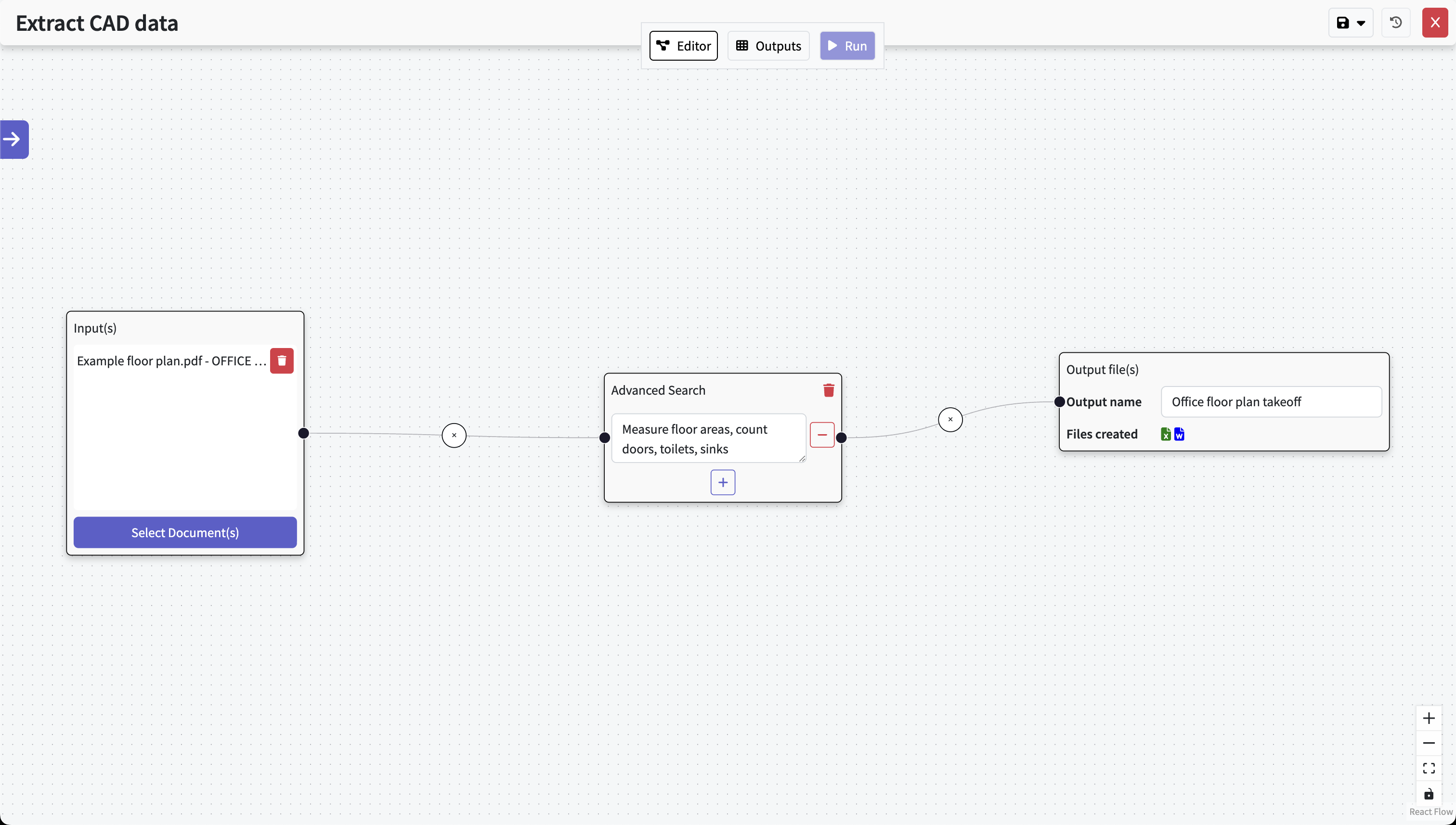
Type out your prompt
Type what you need in natural language (e.g. “count lights, switches, receptacles and smoke detectors by room; measure cable tray lengths by width; capture panel schedules if tabulated”). Hit Run and the AI performs the takeoff and our QA team reviews the results.
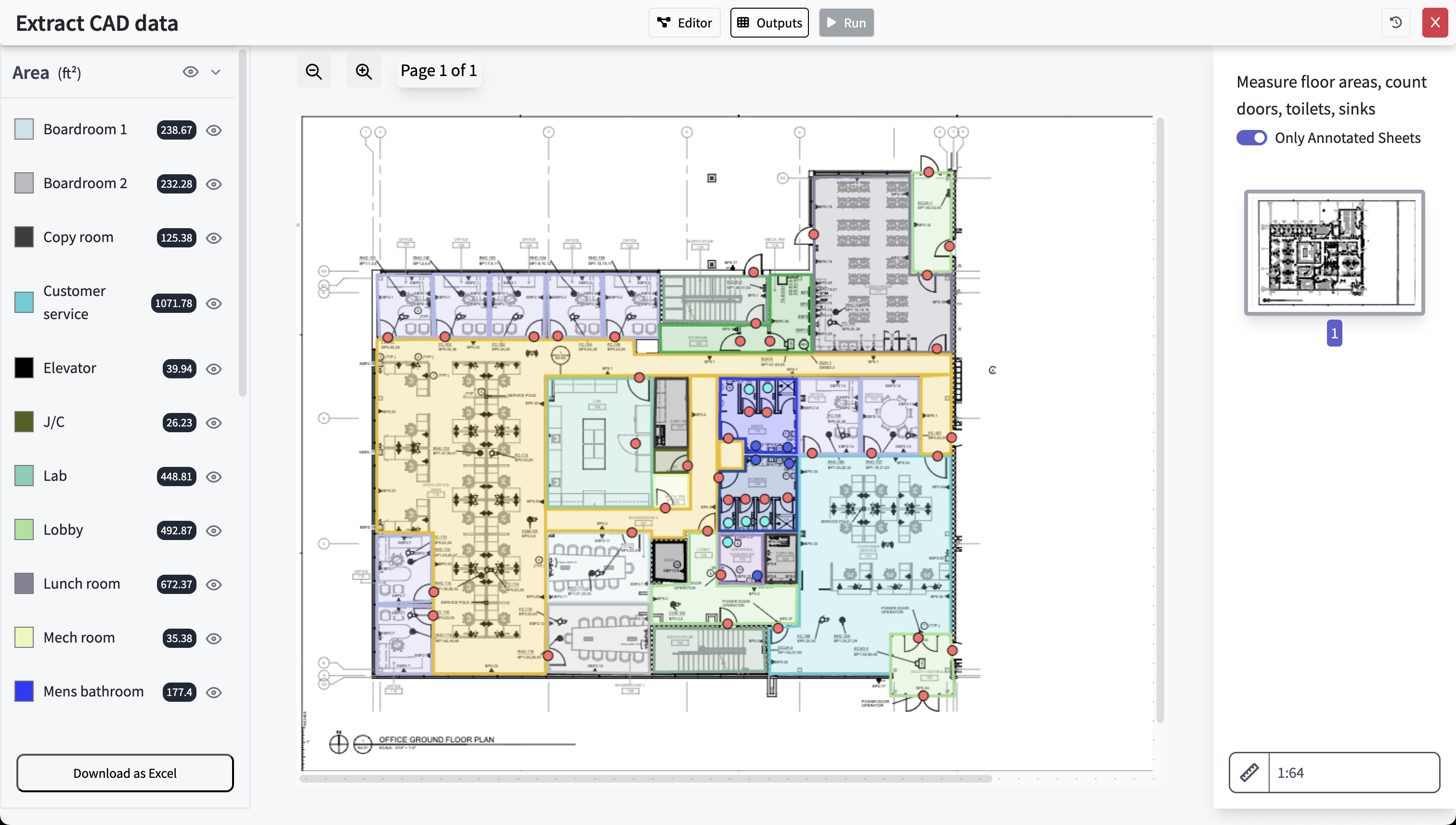
Get results, review & export
What the Draft Takeoff Can Cover
The goal is a clean starting point for pricing—prepared from your drawings and schedules—so your team spends more time refining and less time starting from scratch.
Typical items
- Lighting fixtures by type and location (as shown in legends/schedules)
- Receptacles, switches, data/AV outlets by symbol type
- Fire alarm/life-safety devices (smoke/heat detectors, pull stations, strobes)
- Cable tray linear lengths by width; counts of elbows/tees where drawn
- Panel/DB schedules captured when tabulated on the PDFs
What we read (and what we don’t)
Quantities are taken strictly from the drawings and specifications you provide. We don’t infer conduit/cable routing or circuiting. Wire sizes, tray fill and engineering calcs are included only if explicitly shown in your documents.
What to Expect (and What Not To)
Overview
What you can expect
- A prepared draft electrical takeoff to help your bid
- Clear references back to the drawings and schedules
- Faster internal reviews and fewer back-and-forths
Limitations to note
- Not a 100% automated takeoff—human review is essential
- No inference of circuiting, conduit routes, tray fill or cable sizing
- Only quantities visible in your PDFs are extracted
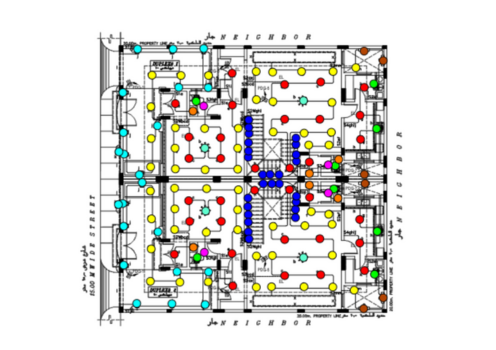
- Lighting
- Outlets & switches
- Fire alarm devices
- Cable tray (by width)
- Panels / DBs (from schedules)
FAQ
Is this suitable for busy bid periods?
Yes. It prepares a draft quickly so your team can review, adjust, and price with confidence instead of starting from a blank page.
Can we trust the numbers?
Use the draft as a starting point. Your QA team checks and fixes anything that needs attention before releasing numbers to stakeholders.
Where do the quantities come from?
From the PDFs you upload—electrical plans, schedules and risers. Everything stays traceable to the source pages for easy review.
What about cable lengths and conduit routing?
We don’t infer routes. Linear measurements are reported only where runs/trays are drawn to scale or tabulated. Engineering checks (voltage drop, diversity, fill) are out of scope unless explicitly provided in your documents.
Prepare Stronger Electrical Bids with Civils.ai
Upload your drawings and schedules, write a quick prompt, click run—then let your QA team review and release a clear, traceable electrical takeoff.
Civils.ai is an assistive tool for bid preparation. Final quantities and assumptions should be reviewed and approved by qualified professionals.