Geotechnical Engineering
What’s below the surface decides what you can safely build above it. These guides cover foundation types and bearing capacity, retaining wall design and the coefficient of friction behind it, slope stability and the main geotechnical hazards on a site, dewatering techniques, and reading RMR/RQD rock-mass parameters and geotechnical reports. A second thread covers turning that same field data — borehole logs, lab results, site investigation reports — into structured data and 3D ground models with AI, instead of digitising it by hand from a stack of PDFs. Useful whether you’re specifying the investigation or reviewing what came back from it.
{# Reciprocal link from each of the three-pillar topic hubs back to its matching product pillar page (docs/SEO_STRATEGY.md sec 8/11, three-pillar reposition) -- hardcoded per-topic rather than a new data structure, since it's exactly 3 fixed pairs and unlikely to grow. Anchor text matches the head-term phrasing each pillar's own PAGE_SEO/H1 was retitled around 2026-08-30. #}
Oct. 17, 2023
A Comprehensive Guide to Pile Foundation Design

Aug. 2, 2023
Ensuring Slope Stability: The Importance and Solutions to Avoid Collapses

July 27, 2023
Understanding the Main Geotechnical Hazards of a Construction Site

July 17, 2023
How to generate 2D Geological Sections using Civils.ai

July 10, 2023
The types of structural foundation and their use cases

July 10, 2023
Eurocode 7 - Partial Factors of Safety and Design Approaches

Feb. 24, 2023
Ground Compaction Methods

Jan. 27, 2023
How to count carbon emissions on construction projects

Jan. 27, 2023
AI use cases in Geotechnical Engineering
Jan. 5, 2023
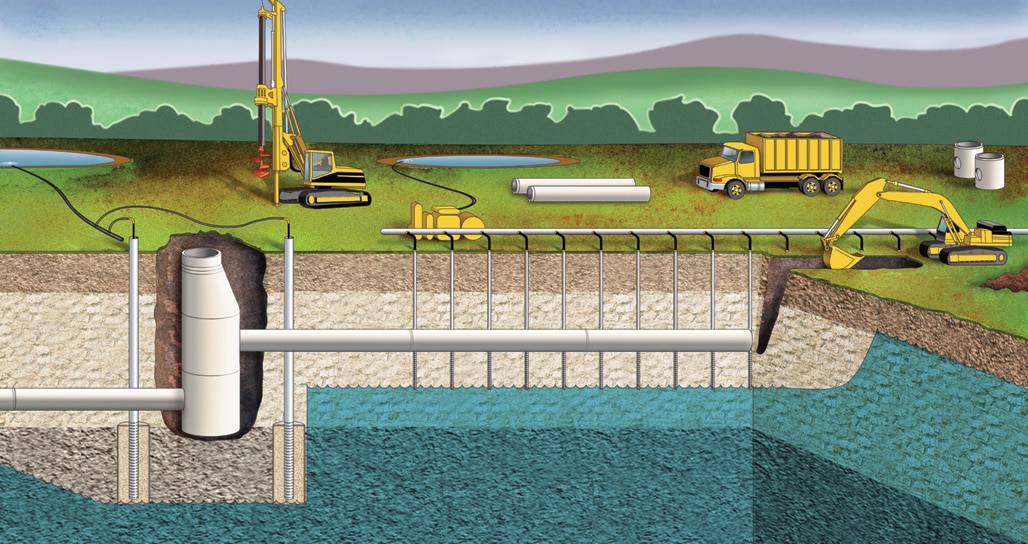
Geotechnical Dewatering Techniques

June 9, 2022