 Mary Janine L. Kamenić
 Julianna Widlund P.E
 Stevan Lukic CEng
Quick Summary
| Topic | Key Finding |
|---|---|
| What Division 1 is | The administrative backbone of a spec — governs all other divisions |
| Cost impact of skipping it | Division 1 obligations can add 3–8% to a project's real cost of delivery |
| Most costly sections missed | 01 40 00 (Quality) and 01 50 00 (Temporary Facilities) |
| Typical testing cost missed | $80,000–$150,000 on a concrete-heavy institutional project |
| Dispute context | Average U.S. construction dispute value: $60.1M (Arcadis 2025 Global Construction Disputes Report) |
| Annual rework cost linked to miscommunication | $31 billion in the U.S. (FMI Construction Disconnected report) |
| Division 1 page count on complex projects | 150–250 pages before any technical division |
| Who produces the most complex Division 1 packages | Government, education, and healthcare owners |
What Division 1 Actually Is
Division 1 is the contract overlay. Owners and design teams use it to define what is included in the project price, how work is managed, and who is responsible for coordination.
The MasterFormat structure places Division 1 before all technical divisions because it governs them. Scope requirements buried in Sections 01 00 00 through 01 99 00 can add 3–8% to a project's real cost of delivery — costs that do not appear in any trade division.
Why Estimators Skip Division 1
Division 1 is skipped because of time pressure, not negligence.
On a competitive bid, estimators work against a hard deadline. Technical divisions define what to price. Division 1 defines how to manage it — and that reads like a project management problem rather than an estimating problem.
The typical pattern:
- Estimator pulls bid documents
- Jumps to technical trade sections
- Runs takeoffs
- Does a five-minute Division 1 scan on the morning of bid day
That is not a review. A Pre-Construction Lead at a Top-ENR Canadian GC described the consequence directly: "If you miss anything, they'll bill it." That applies to subcontractors billing the GC, and to owners billing back against GC obligations that were never priced.
In a rising institutional market, that pattern produces more frequent losses.
The Six Division 1 Sections That Generate the Most Scope Gaps
1. Section 01 10 00 — Summary of Work
Summary of Work: Defines the project scope and work sequence, lists owner-furnished equipment, identifies phasing, and clarifies what the GC is and is not responsible for delivering.
What estimators miss:
- Work sequence restrictions that require extended general conditions
- Owner-furnished equipment that still requires GC coordination, blocking, or installation
- Multiple prime contractor requirements that affect MEP coordination cost
- Phased occupancy requirements that affect supervision duration
Read this section before pricing general conditions.
2. Section 01 20 00 — Price and Payment Procedures
Price and Payment Procedures: Governs how change orders are priced and paid. Sets markup caps on extra work, defines allowable overhead and profit percentages, and specifies whether unit prices apply.
What estimators miss:
- Markup limits that make change order margins unprofitable
- Unit price schedules that lock in rates before full scope is known
- Payment terms that affect cash flow on long-duration projects
Pricing gaps created during Division 1 review surface as disputes at construction — not at bid. A pre-construction manager at a mid-market Southeast GC described the disconnect: "Pre-con is working in the scope sheet world and project management is working in the scopes of work."
3. Section 01 30 00 — Administrative Requirements
Administrative Requirements: Covers submittals, RFIs, project meetings, and scheduling requirements. Defines how much documentation work the project actually requires.
What estimators miss:
- Submittal register requirements that mandate shop drawing review timelines
- Scheduling software specifications (e.g., Primavera vs. Microsoft Project)
- Meeting frequency requirements that carry a real labor cost for a superintendent or PM
On a $40M institutional project, mandatory bi-weekly owner meetings with formal minutes plus a 600-line submittal log is not a free deliverable. It requires explicit pricing.
4. Section 01 40 00 — Quality Requirements
Quality Requirements: Contains testing and inspection requirements, mock-up requirements, special inspection programs, and third-party commissioning requirements.
What estimators miss:
- Independent testing lab costs not included in trade scopes
- Mock-up requirements for envelope, flooring, or wall systems — common on government and education projects
- Commissioning requirements that require GC coordination time
Government and institutional owners have expanded quality programs significantly. A single special inspection program on a concrete-heavy education project can run $80,000–$150,000. That cost typically does not appear in any technical division. It sits in Division 1, and the GC is responsible for coordinating and, in many cases, paying it.
5. Section 01 50 00 — Temporary Facilities and Controls
Temporary Facilities and Controls: Defines what the GC provides during construction — site fencing, temporary power, hoarding, signage, construction access roads, dust control, and noise mitigation.
What estimators miss:
- Site hoarding specifications exceeding standard chain link, common on urban institutional sites
- Noise and vibration monitoring requirements
- Temporary heat requirements for winter work on enclosed buildings
- Material storage and protection requirements
One documented example from GC pre-construction teams: a $10,000 glulam beam destroyed in a lay-down yard because no clause required material protection on site. The Division 1 temporary facilities section had no storage protection requirement, the sub scope had no protection clause, and the GC absorbed the loss.
6. Section 01 77 00 — Closeout Procedures
Closeout Procedures: Defines project closeout requirements — warranty documentation, operations and maintenance manuals, as-built drawings, and owner training requirements.
What estimators miss:
- Owner training requirements that consume field staff time
- As-built drawing standards that require BIM deliverables
- Warranty periods that extend beyond standard one-year terms on specific systems
On a complex institutional project, closeout is a multi-month process. If general conditions do not account for Division 1 closeout requirements, the PM absorbs that time against a project already closed financially.
The "Readily Inferable" Problem
Division 1 expands that obligation. When Division 1 includes broad coordination language — for example, "GC shall provide all work necessary for a complete and operational facility" — owners use it to argue that unlisted scope items are implied.
As a Senior PM at a Canadian ICI GC described it: "Our construction management clients expect us to find the scope gaps in the design too now. They expect us to be designers and engineers."
The GC that reads Division 1 carefully prices a coordination allowance. The one that does not faces change order disputes rejected under "readily inferable" terms.
A Practical Division 1 Reading Protocol
The following sequence surfaces the highest-cost items first. It is not a complete checklist — it is a priority reading order.
Step 1: Read Section 01 10 00 Before Any Takeoff
- Confirm the project scope
- Check for phasing, owner-furnished equipment, and multiple prime requirements
- Flag any of those conditions to your PM before pricing general conditions
Step 2: Pull Section 01 50 00 for General Conditions Pricing
- Identify all temporary facilities requirements explicitly
- Price them as line items — not as a percentage of construction cost
- Confirm temporary heat, hoarding standards, and noise monitoring requirements
Step 3: Read Section 01 40 00 for Testing and Mock-Up Costs
- Build a dedicated line item for testing and inspection
- Identify any commissioning agent or third-party consultant requirements
- Confirm whether the GC pays or only coordinates
Step 4: Review Section 01 20 00 Before Finalizing Markup
- Identify any change order markup caps
- Compare unit price schedules against current market rates
- Assess payment term impact on cash flow
Step 5: Cross-Reference Division 1 Against Scope Packages
- Reflect Division 1 obligations explicitly in every trade scope package
- Include submittal schedules, testing obligations, and coordination requirements
- Reference Division 1 directly in subcontractor scopes — do not carry compliance costs in the estimator's head
How Technology Supports Division 1 Review
Division 1 on a complex institutional project can run 150–250 pages before any technical division. No estimator reads every word on every bid.
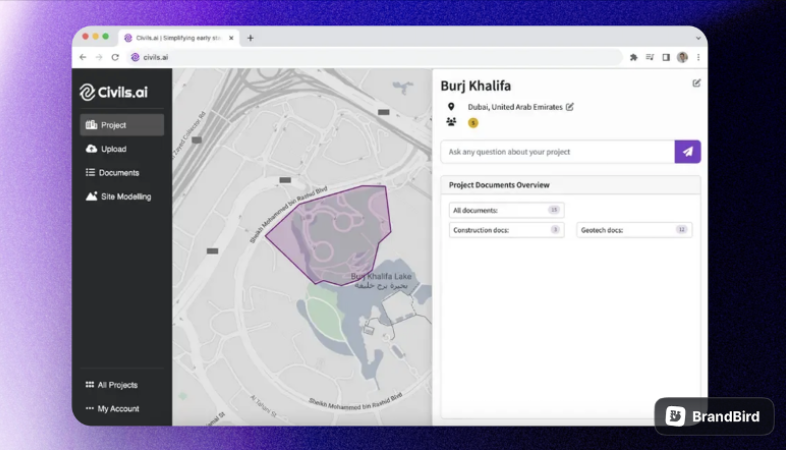
Civils.ai provides tools that help GC pre-construction teams work through Division 1 faster without missing items that create cost exposure later.
- Chat Agent: Allows estimators to ask direct questions about specifications and returns cited answers — including the exact clause — in under 20 seconds. Civils.ai has processed over 66,000 construction documents and answered more than 50,000 queries against real project sets. Answers are traceable to the source clause.
- Scope Agent: Generates complete scope-of-work packages from the full project document set — drawings and specifications together. Division 1 obligations are reflected in subcontractor scope packages automatically.
- Drawing takeoffs agents: Can begin preparing the initial high-level quantity takeoff before performing division specific takeoffs.
For teams managing multiple active pursuits, the bottleneck is time, not skill. These tools reduce the time required to extract Division 1 obligations without increasing the risk of missing them.
Why the Institutional Market in 2026 Makes This More Urgent
Institutional construction — education, healthcare, government — is the primary growth sector in 2026. The pipeline is real. So is the complexity.
| Sector | Division 1 Characteristics |
|---|---|
| Federal / Government | Longest specs, most formal submittal processes, most extensive testing programs |
| Education (K-12, Higher Ed) | Detailed quality programs, phased occupancy common, strict closeout requirements |
| Healthcare | Commissioning requirements, infection control provisions, extended warranty terms |
| Commercial / Retail | Shorter Division 1 packages, less formal testing and submittal requirements |
Dispute context:
- Average U.S. construction dispute value: $60.1 million (Arcadis 2025 Global Construction Disputes Report)
- Errors and omissions in contract documents have been the number-one dispute cause for six of the last nine years
- Annual U.S. rework costs linked to miscommunication and bad project data: $31 billion (FMI Construction Disconnected report)
- 26% of that rework originates from communication breakdowns
Division 1 defines the communication protocols. Missing it builds communication failures into the project from bid day forward.
The Bottom Line
Division 1 is not background reading. It defines what is being bought and sold when a contract is signed.
Estimators who read Division 1 carefully and build its requirements into scope packages:
- Win fewer disputes
- Have better buyout conversations
- Produce change orders that hold up because the scope is tighter from the start
Estimators who skip it find out what they missed during construction. By then, the cost is already locked in.
Frequently Asked Questions
What is Division 1 in construction specifications?
Division 1 — General Requirements — is the administrative section of a project specification. It sets the rules governing all other divisions: submittals, testing, temporary facilities, closeout, and payment procedures. It does not describe trade-specific work. It defines how all work on the project is managed and delivered.
Why do estimators skip Division 1?
Time pressure is the primary cause. Estimators go directly to the technical divisions because those sections drive the numbers. Division 1 looks administrative. But it contains scope obligations — testing costs, mock-up requirements, temporary facilities, closeout documentation — that directly affect bid price and project margin.
Which Division 1 sections generate the highest unpriced costs?
Section 01 40 00 (Quality Requirements) and Section 01 50 00 (Temporary Facilities) generate the highest unpriced costs most consistently. Testing programs and temporary heat can run six figures on institutional projects. Closeout requirements in Section 01 77 00 also add real PM time that is rarely priced explicitly.
How does missing Division 1 create scope gaps at buyout?
If Division 1 obligations are not written into subcontractor scope packages, the GC carries them by default. Testing, coordination, and submittal requirements that flow from Division 1 but do not appear in trade scopes become GC cost. Subcontractors will not volunteer to absorb obligations they were never given at bid time.
What does "readily inferable" mean in a construction contract?
Many contracts require the GC to perform work "reasonably inferable" from the documents, even if not explicitly listed. Division 1 often includes broad coordination language that owners use to argue unlisted scope is implied. GCs who read Division 1 carefully price a coordination allowance. Those who do not face disputed change orders rejected as "readily inferable."
How can AI tools help with Division 1 review?
Civils.ai's Chat Agent allows estimators to query Division 1 directly — asking specific questions about temporary facility requirements, testing obligations, or closeout procedures — and returns cited answers in under 20 seconds. Scope Agent pulls Division 1 obligations into subcontractor scope packages automatically, so they are not carried separately in an estimator's notes. Civils.ai has processed over 66,000 construction documents across real project sets.
How has institutional construction increased Division 1 complexity in 2026?
Government and institutional owners write more detailed and more restrictive Division 1 packages than commercial or industrial clients. With institutional construction volume up significantly in 2026, estimators are encountering longer testing programs, stricter submittal requirements, and more formal closeout documentation requirements — all contained in Division 1, all before the first technical section.